
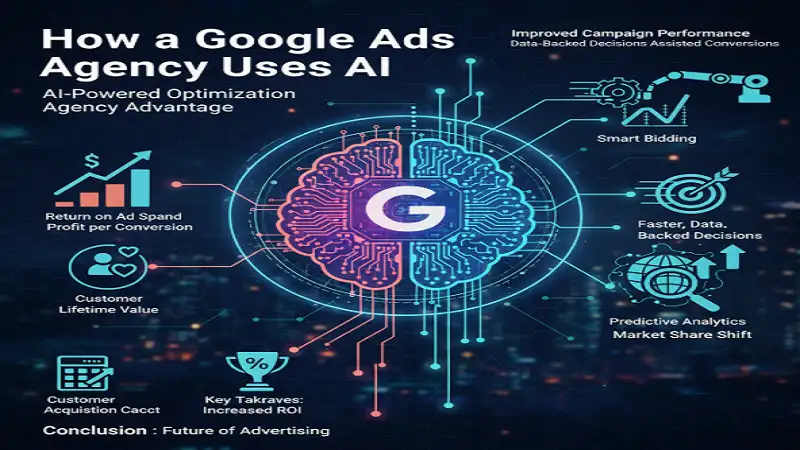
Remember when AI felt like something out of a sci-fi movie? Well, it’s officially moved from the silver screen to the search engine screen, becoming an indispensable tool for anyone serious about digital advertising. For a modern Google Ads agency, AI isn’t just a fancy buzzword; it’s a foundational element woven into the very fabric of their daily operations. It’s not about robots taking over, but rather about smart technology empowering human strategists to achieve remarkable results. Think of AI as the ultimate co-pilot for your Google Ads campaigns. It crunches numbers, spots patterns, and makes recommendations at a speed and scale that no human ever could. This allows agencies to move beyond manual, time-consuming tasks and focus on the higher-level strategy and creative insights that truly make campaigns sing. We’re talking about a significant upgrade in how we approach everything from budget allocation to audience targeting, making campaigns not just better, but smarter.
AI-Powered Optimization
The digital landscape shifts constantly, and staying ahead requires more than just keeping an eye on the dashboard. It demands real-time analysis, predictive capabilities, and the ability to adapt almost instantly. This is precisely where AI steps in, transforming the optimization process from a reactive chore into a proactive advantage.
Smart Bidding
One of the most immediate and impactful ways a Google Ads agency leverages AI is through smart bidding strategies. Google’s own machine learning algorithms are incredibly sophisticated, designed to optimize bids in real-time for specific conversion goals. But here’s the kicker: simply turning on smart bidding isn’t enough. Agencies don’t just set it and forget it. Instead, they act as the strategic architects, defining the right conversion actions, setting appropriate target ROAS or CPA goals, and providing the AI with clear directives. They interpret the performance data, refine the inputs, and ensure the AI is learning and adapting in a way that aligns perfectly with client objectives. It’s a dynamic partnership where human expertise guides the machine’s powerful execution, leading to more efficient spend and improved return on investment.
Predictive Analytics
Beyond just reacting to current performance, AI offers a crystal ball of sorts through predictive analytics. By analyzing vast datasets, historical campaign performance, market trends, seasonal fluctuations, and even competitor activity, AI can forecast future outcomes with impressive accuracy. This isn’t just guessing; it’s informed prediction based on patterns invisible to the human eye. Imagine knowing which keywords are likely to trend next month, or which audience segments will be most receptive to a new offer based on past behavior. This foresight allows agencies to make incredibly strategic decisions about budget allocation, ad copy variations, and audience segmentation well in advance. It means moving from a reactive stance to a proactive one, identifying opportunities and mitigating risks before they even fully materialize. As HubSpot often highlights, data-driven insights are the bedrock of effective modern marketing, and predictive AI takes that to the next level.
Agency Advantage
So, what does all this AI wizardry mean for businesses partnering with an agency? It translates directly into a competitive edge, better campaign outcomes, and ultimately, a more robust return on their advertising investment. The synergy between human strategists and artificial intelligence creates a powerful combination that’s hard to beat.
Faster, Data-Backed Decisions
One of the most significant advantages AI brings to the table is its ability to process and analyze colossal amounts of data at lightning speed. Human analysts are brilliant, but they simply can’t sift through millions of data points in seconds, identify subtle correlations, and present actionable insights. AI can. This means decisions aren’t just faster; they’re also infinitely more informed and backed by robust data.
When an agency integrates AI into its services, it transforms how google ads management is executed. Instead of spending hours compiling reports or manually adjusting bids, strategists can dedicate their time to higher-level thinking: refining overall strategy, exploring new market segments, and crafting more compelling ad creatives. This frees up valuable human capital for truly strategic work, rather than repetitive tasks. This blend of AI efficiency and human oversight also ensures that management services are not just optimized for clicks, but for genuine business growth. The AI identifies the optimal paths, and the human expert ensures those paths align with the brand’s unique voice and long-term goals. It’s about combining the analytical power of the machine with the creative intuition and strategic foresight of experienced professionals. As Think with Google regularly emphasizes, the future of marketing lies in harnessing smart technology to augment human creativity and strategic thinking, not replace it.
Key Takeaways
- AI is a foundational tool for modern Google Ads agencies, augmenting human expertise rather than replacing it.
- Smart bidding, powered by AI, optimizes real-time bids for conversion goals, guided by strategic human input.
- Predictive analytics uses AI to forecast trends and user behavior, enabling proactive budget allocation and targeting.
- Agencies leverage AI to make faster, more data-backed decisions, freeing up strategists for high-level creative and strategic work.
- The combination of AI’s analytical power and human strategic insight leads to superior campaign performance and ROI.
Conclusion
The landscape of digital advertising is dynamic, demanding continuous innovation and adaptation. For any business looking to truly thrive on Google Ads, partnering with a forward-thinking Google Ads Agency isn’t just about managing campaigns; it’s about embracing the future of performance marketing. By harnessing the power of AI, these agencies aren’t just optimizing ads; they’re crafting intelligent, adaptive strategies that drive real, measurable growth, ensuring businesses don’t just compete, but lead.